Before the public stage
Hyderabad, 1879. A Bengali household at the edge of a princely state, a father who believed in examinations, a mother who wrote verse, and a girl who passed her matriculation at twelve. Everything she later did in public began here.
- Born
- 13 February 1879, Hyderabad, Hyderabad State
- Father
- Aghorenath Chattopadhyay — scientist and educationist, holder of a doctorate from the University of Edinburgh, and principal of Nizam College, Hyderabad
- Mother
- Barada Sundari Devi — a poet who wrote in Bengali
- Language at home
- Bengali, in a city whose court language was Urdu and whose administration ran increasingly in English
- Died
- 2 March 1949, Government House, Lucknow

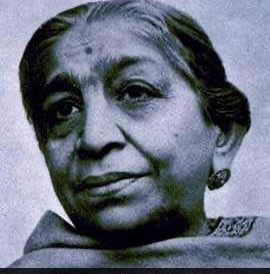
Photographs of Sarojini Naidu from before 1900 are scarce. Most surviving images date from the period after she had already become a public figure.
The household
A family that treated education as an argument
Aghorenath Chattopadhyay had studied in Edinburgh and returned to India with a doctorate and a conviction that Indians should be taught modern science by Indians. He became the founding principal of Nizam College in Hyderabad. Barada Sundari Devi wrote poetry in Bengali. Between them they raised a household in which reading, argument and public opinion were ordinary domestic activity.
It was also a household that produced an unusual number of public figures. Of her siblings, Virendranath Chattopadhyay became a revolutionary who spent most of his adult life in exile in Europe; Harindranath Chattopadhyay became a poet, dramatist and actor, and later a member of the Lok Sabha; Suhasini Chattopadhyay became a communist organiser. Two sisters, Sunalini and Mrinalini, worked in dance and early cinema.
This matters for reading Sarojini Naidu accurately. She did not arrive at nationalism as a lone poet who happened to be moved by politics. She grew up inside a family that was already, in several different directions, political.
The student
Matriculated at twelve, at the head of the list
In 1891 she sat the matriculation examination of the University of Madras and placed first. She was twelve years old. The result made her locally famous and, by the standards of the time, marked her out for the kind of academic career her father wanted for her — mathematics and the sciences.
She did not take it. By her own later account, verse kept interrupting. The story she told afterwards — that a poem arrived in the middle of an algebra problem — is the kind of anecdote that hardens into legend, and it should be read as self-description rather than documentary record. What is not in doubt is the outcome: an adolescent who was writing at length, in English, and being taken seriously for it.
Standard biographies record two early works from these years: a long poem, and a play in Persian titled Maher Muneer, which is said to have impressed the Nizam of Hyderabad sufficiently that a scholarship for study in England followed. The details of that sequence come to us largely through later accounts rather than contemporary documents, and are best treated with that in mind.
A note on evidenceMuch of what is known about Sarojini Naidu’s childhood survives through memoir and later biography rather than through contemporary papers. This page marks the difference where it matters. Where a claim rests on recollection, it says so.
1895 – 1898
England, and the advice that changed her writing
She travelled to England in 1895, aged sixteen, supported by a scholarship associated with the Nizam of Hyderabad. She studied at King’s College London and then at Girton College, Cambridge. She left in 1898 without completing a degree.
The formal education is not the important part. The important part is who she met.
Edmund Gosse
The critic Edmund Gosse read her early English verse and told her, in substance, to stop. She was writing competent imitations of English poets about English subjects, and there were already a great many of those. He advised her to write about India — its landscape, its streets, its people — in English. He later wrote the introduction to The Bird of Time and set down that exchange himself.
Arthur Symons
Symons, a central figure of the 1890s literary scene in London, became a friend and correspondent, and introduced The Golden Threshold in 1905. Through him she came into contact with the circles that would review, publish and read her.
What the advice cost
Gosse’s instruction produced her distinctive body of work — and also the terms on which English readers would receive it. To write “as an Indian” for a London publisher in 1905 was to accept a frame not of her own making. Later critics have read her work partly as a negotiation with that frame. That is interpretation, and this site presents it as such.
1898
A marriage that crossed a line the period took seriously
On her return from England she married Dr Govindarajulu Naidu, a physician. The marriage crossed caste boundaries — she came from a Bengali Brahmin family, he did not — and it was made with her father’s support, at a time when such a union carried real social cost.
It is worth registering plainly, because it is often reduced to a line in a chronology. Before she argued in public for women’s right to make their own decisions, she had made one.
Their best-documented child is Padmaja Naidu, who became a political figure in her own right and served as Governor of West Bengal from 1956 to 1967. Sources differ on the total number of children; this site does not state a figure it cannot support.
TerminologyHyderabad in 1879 was a princely state under British paramountcy, not part of British India directly. Sarojini Naidu therefore grew up under an Indian ruler inside an imperial system — a distinction that shaped what politics looked like from where she stood.
Early literary development
Learning to write India in English metre
Between her return in 1898 and her first collection in 1905 she was writing steadily, publishing in periodicals, and working out the technical problem that defines her verse.
The problem was this. English verse of the period came with fixed metrical habits — the ballad stanza, the lyric refrain, the regular iambic line. Indian subject matter came with its own rhythms, its own vocabulary of objects and trades and festivals, and no established English form waiting to receive it.
Her solution was to keep the English forms intact and fill them with Indian material: palanquin bearers chanting as they carry a bride, weavers at three stages of a life, fishermen on the Coromandel coast, the sellers in a Hyderabad bazaar. The result reads as song because it was built to. Several of these poems were set to music in her lifetime.
Whether that solution was a triumph or a compromise has been argued about for a century. Both readings are defensible, and neither is a fact.
Weavers, weaving at break of day,
Opening lines of ‘Indian Weavers’, The Golden Threshold, 1905 — public domain
Why do you weave a garment so gay?
CopyrightSarojini Naidu died in 1949 and her published collections of 1905, 1912 and 1917 are out of copyright. Even so, this site quotes only brief excerpts and prefers analysis to reproduction.